

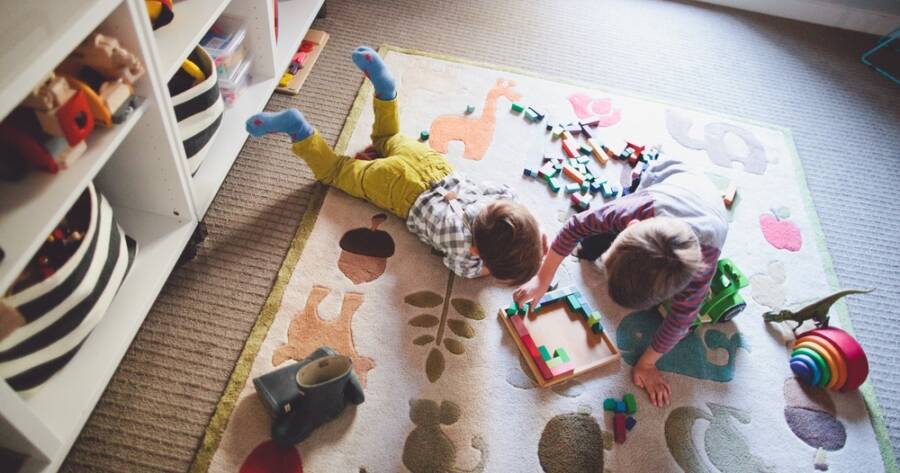
The right toys can do far more than keep children busy. Building sets, pretend-play toys, puzzles, creative materials, and active-play options can encourage curiosity, movement, problem-solving, and imagination while still feeling like pure fun. Choosing age-appropriate toys that match a child’s interests can help create playtime that is both engaging and developmentally meaningful.
Why Toy Choice Matters More Than Most People Realize
Not all toys are created equal, and the distinction matters more than many parents might expect. Research confirms that toys and games serve as essential tools supporting children’s cognitive, motor, psychosocial, emotional, and linguistic development across early childhood (source). In other words, a thoughtfully chosen toy does far more than fill time between meals and bedtime.
Play is widely considered children’s primary occupation, and the toys they interact with directly shape the quality and depth of their developmental experiences (source). This means that when parents and caregivers take toy selection seriously, they are making a meaningful investment in a child’s growth. The good news is that great toys do not have to be expensive or complicated to deliver real benefits.
Building and Construction Toys
Few toy categories have stood the test of time quite like building and construction sets. Blocks, stacking toys, and interlocking pieces give children a hands-on way to explore cause and effect, spatial reasoning, and early problem-solving. When a child arranges blocks into a tower and watches it fall, that moment of discovery is actually a small experiment in physics and consequence.
Simple objects like blocks, empty containers, shape sorters, and puzzles are among the best ways to support a child’s creativity and understanding of how the world works (source). Construction toys encourage children to plan, test ideas, and try again when something does not work, which builds persistence alongside spatial skills.
Pretend Play Sets and Imaginative Toys
Pretend play sets are another category that delivers impressive developmental value. Whether children are running a toy kitchen, setting up a miniature grocery store, or acting out scenes with action figures, imaginative play gives them a safe space to process real-world experiences. It also builds language skills as children narrate scenarios and take on different roles.
Different categories of toys, including construction toys, pretend-play sets, and physical activity toys, each stimulate distinct developmental domains in children (source). Pretend play, in particular, supports emotional understanding as children experiment with empathy and perspective-taking through storytelling and role-playing. This type of play also sharpens vocabulary and conversational skills in ways that benefit children well into their school years.
Sensory and Exploration Toys for Younger Children
For babies and toddlers, toys that engage the senses offer some of the richest learning opportunities available. When interacting with an object like a toy, babies function as little scientists, using their sensory-motor skills to explore its properties and conduct experiments, such as banging it on the floor to learn whether it is solid (source). Textured surfaces, rattles, soft toys with varied materials, and toys that make sounds all give young children rich sensory input to process and learn from.
Age-appropriate toy selection is a key factor in maximizing the educational and developmental benefits of children’s play (source). For the youngest children, this means prioritizing toys that engage touch, sight, and hearing over those requiring fine motor coordination they have not yet developed.
Art Supplies, Music Toys, and Creative Materials
Creative toys that involve art and music open up yet another dimension of development. Crayons, paint sets, musical instruments, and even simple rhythm toys give children opportunities to express themselves in ways that words alone cannot capture. Activities that involve music and art support cognitive, social-emotional, and multisensory skills (source).
Even basic art supplies like washable markers and finger paints allow children to develop hand-eye coordination while experimenting with color, texture, and form. Music toys, from simple xylophones to drum sets sized for small hands, encourage rhythm awareness, listening skills, and a sense of creative accomplishment. These benefits accumulate over time and often show up in academic settings as improved focus and expression.
Active Play Toys and Physical Development
Toys that get children moving are equally important in a well-rounded play environment. Balls, ride-on toys, balance boards, and jumping equipment encourage gross motor development in ways that sitting activities simply cannot match. Beyond building strength and coordination, active play toys also support children’s ability to plan, organize, get along with others, and manage their emotions (source).
When children play physical games together, they also practice the social skills needed to navigate teamwork, competition, and cooperation. A simple ball game in the backyard, for example, involves turn-taking, communication, and learning to handle both winning and losing with grace. These moments of physical play lay important groundwork for social and emotional intelligence.
Puzzles and Games That Challenge Young Minds
Puzzles and strategy games deserve a prominent place in any child’s toy collection. Jigsaw puzzles of varying complexity, memory matching games, and board games that require simple planning all challenge children to think critically and stay focused on a task. These toys build patience and concentration in an age where distractions are plentiful.
Research shows play can improve children’s abilities to plan, organize, get along with others, and regulate emotions, while also helping with language, math, and social skills, and even helping children cope with stress (source). Puzzles and games are a direct expression of this, weaving cognitive challenge into an activity that children genuinely enjoy. When a child completes a difficult puzzle or wins a game through clever strategy, the confidence gained often carries over into other areas of their life.
Why You Should Learn More About Popular Toy Ideas for Kids
Selecting the right toys is one of the most impactful ways caregivers and parents can enrich a child’s early years. From building sets and pretend play to art supplies and active toys, each category offers its own blend of fun and developmental benefit. The range of available toy ideas means there is something suitable for every age, interest, and stage of growth.
Understanding what makes certain toys more engaging and beneficial allows families to make smarter choices that support learning without sacrificing joy. Children thrive when their environment is filled with opportunities to explore, create, move, and connect, and thoughtfully chosen toys make all the difference in shaping those moments into something truly valuable.